
Pitch Fibre Drains
If your home was built between the 1950s and the mid-1970s, there's a good chance the pipes under your garden are made of pitch fibre. Builders used it widely in that period because it was light, cheap and quick to lay. Each pipe is made from wood pulp soaked in coal tar pitch, and it was designed to last somewhere between 30 and 40 years. Most pitch fibre drains have now passed that point, and many are starting to show their age.
Over time, these pipes can squash out of shape, blister on the inside, crack or even collapse. At Plumbco, our engineers can survey your drains, tell you plainly what condition they're in and recommend the right repair. We never charge call-out fees, we agree a fixed price with you before any work starts, and there's no extra charge for nights or weekends.
Call us today and a real engineer will answer in under 60 seconds or send us a message through our contact form.
Pitch Fibre Drain Problems
Deformation (Ovalling)
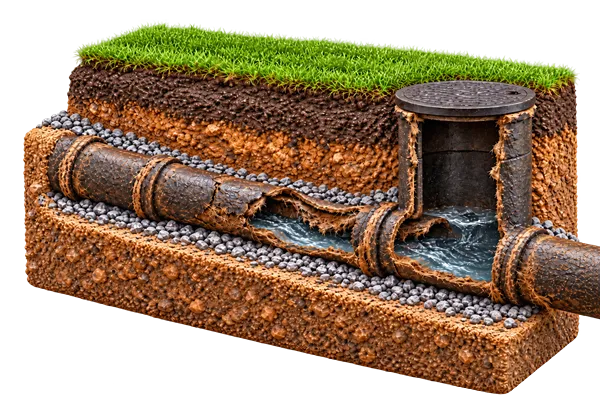
This is the most common fault. Soil pressure gradually flattens the pipe from a circle into an oval, which can cut its capacity by as much as half. The narrower the pipe becomes, the more easily waste catches, and in time the flow can stop altogether.
Blistering
The tar coating can peel away from the pulp core underneath, leaving bubbles that push into the pipe and snag waste as it passes. Blistering is often the first sign that the pipe is beginning to break down more seriously.
Cracking and Fracture
As pitch fibre turns brittle with age, cracks open along the pipe and at the joints. Groundwater can then seep in, roots can push through and soil can wash into the system, which makes every other problem worse.
Collapse
In the worst cases, the pipe gives way completely. This leaves gaps in the ground that hold waste, and it can lead to sinkholes or sinking ground above the pipe run. The good news is that most of these faults can be put right. The best fix depends on how far the damage has gone, so here are the options we offer.
How to Identify Pitch Fibre Drains
Pitch fibre doesn't announce itself, so the first job is working out whether it's there. A few signs usually point the way:
- Your Home Was Built Between 1950 and 1975: This was the peak period for pitch fibre in UK housing.
- A Camera Survey Shows Oval Pipes: Soil pressure slowly squeezes the pipe from a circle into an egg shape.
- Blockages Keep Coming Back: You clear one and it returns within weeks, because the squashed pipe catches waste at its narrow points.
- A Homebuyer's Survey Mentioned Pitch Fibre: Surveyors now flag it as a risk when they spot it.
- The Pipe Looks Rough Inside on Camera: Clay and PVCu have smooth walls, but pitch fibre has a fibrous, textured surface.
If several of these sound familiar, a camera survey will confirm the material and show how much life is left in it. That matters, because pitch fibre drains tend to fail in four distinct ways.
Pitch Fibre Drains Treatment Options
Re-Rounding and CIPP Relining
Where a pipe has gone oval but hasn't collapsed, we can often save it without digging. A winch-driven tool pushes the walls back into a circle, and a resin liner (known as CIPP, or cured-in-place pipe) is then fitted straight away. This forms a new, strong pipe inside the old one, so the pitch fibre can't squash again. Because there's no excavation, your garden and driveway stay largely untouched, which is why it's often the first option we look at for deformed pipes.
Patch Repair
Sometimes the damage is limited to one blister, one crack or a short, squashed section, and treating the whole run would be unnecessary. In that case, we place a resin patch over the defect and seal it in a single targeted repair. This is quicker than lining the full length of pipe, and it usually costs less too.
Full Excavation and Replacement
If the pipe has collapsed, broken up or worn beyond what a liner can support, replacement is the lasting answer. We dig out the old pitch fibre, lay new PVCu pipework to Building Regulations standards and reinstate any surfaces we've disturbed. It's a bigger job than relining, but it gives you a sound drain for the long term.
Whichever route suits your property, we'll explain why we recommend it before any work begins. If you'd like to know more first, these are the questions homeowners ask us most.
Call or send an enquiry.
Why Choose Plumbco?
Pitch Fibre Drains FAQs
It isn't an emergency, but pitch fibre is a material that only gets worse with time. A camera survey shows the current condition, so you can plan a repair before a blockage or collapse forces your hand. Many homeowners act after a survey spots the first signs of squashing.
Worried About Your Pitch Fibre Drains?
If you think your home has pitch fibre drains, we'll take a proper look and give you a clear, honest recommendation. Our licensed, fully insured engineers cover Dorset, Hampshire and Wiltshire, day or night, and there's never a call-out fee.
Call us on 0808 303 8888 and a real engineer will answer in under 60 seconds or send your details through our contact form, and we'll get back to you.
-
Engineers on call 24/7
-
A clear price before we start